

5 AI Readiness Lessons for Document Management
Five AI Readiness Lessons for Better Document Management

Trusted AI starts with trusted business content.
AI is moving from assistance to action. In the webinar Content Readiness for AI and Agents, experts from Forrester, Microsoft, and M-Files explored what that shift means for the information behind Copilot and AI agents.
The central message was straightforward: reliable AI outcomes depend on well-governed information. For organizations investing in Microsoft 365 Copilot and automation, content readiness is now a practical business priority. Here are five takeaways.
1. Trusted AI Is an Information Problem
AI initiatives often begin with models, tools, and use cases. But the quality of the outcome depends on the information behind the experience. Outdated, duplicated, poorly permissioned, or disconnected content can lead to incomplete answers and unreliable actions.
That makes AI readiness an information management priority. A modern document management system helps organizations establish reliable information, clear ownership, appropriate access, and lifecycle controls. The objective is not to make every file available to AI. It is to make the right information dependable for people and agents.
2. Not All Content Needs the Same Level of Governance
Everyday collaboration content can remain in the tools best suited to teamwork and productivity. Other information directly affects operations, compliance, risk, and AI outcomes and therefore requires stronger controls. This strategic business content includes:
- Contracts and customer documentation
- Quality and compliance records
- Standard operating procedures
- Engineering and technical documentation
- Regulated records and approval-driven content
The consequences of using an outdated contract, obsolete procedure, or unauthorized record are higher. Enterprise document management allows organizations to apply stronger governance and lifecycle controls where they matter most, without creating unnecessary friction for every file.
3. Business Context Makes Information More Useful
A document rarely tells the whole story. A contract is more useful when AI understands the customer, business owner, approval status, renewal date, and related obligations.
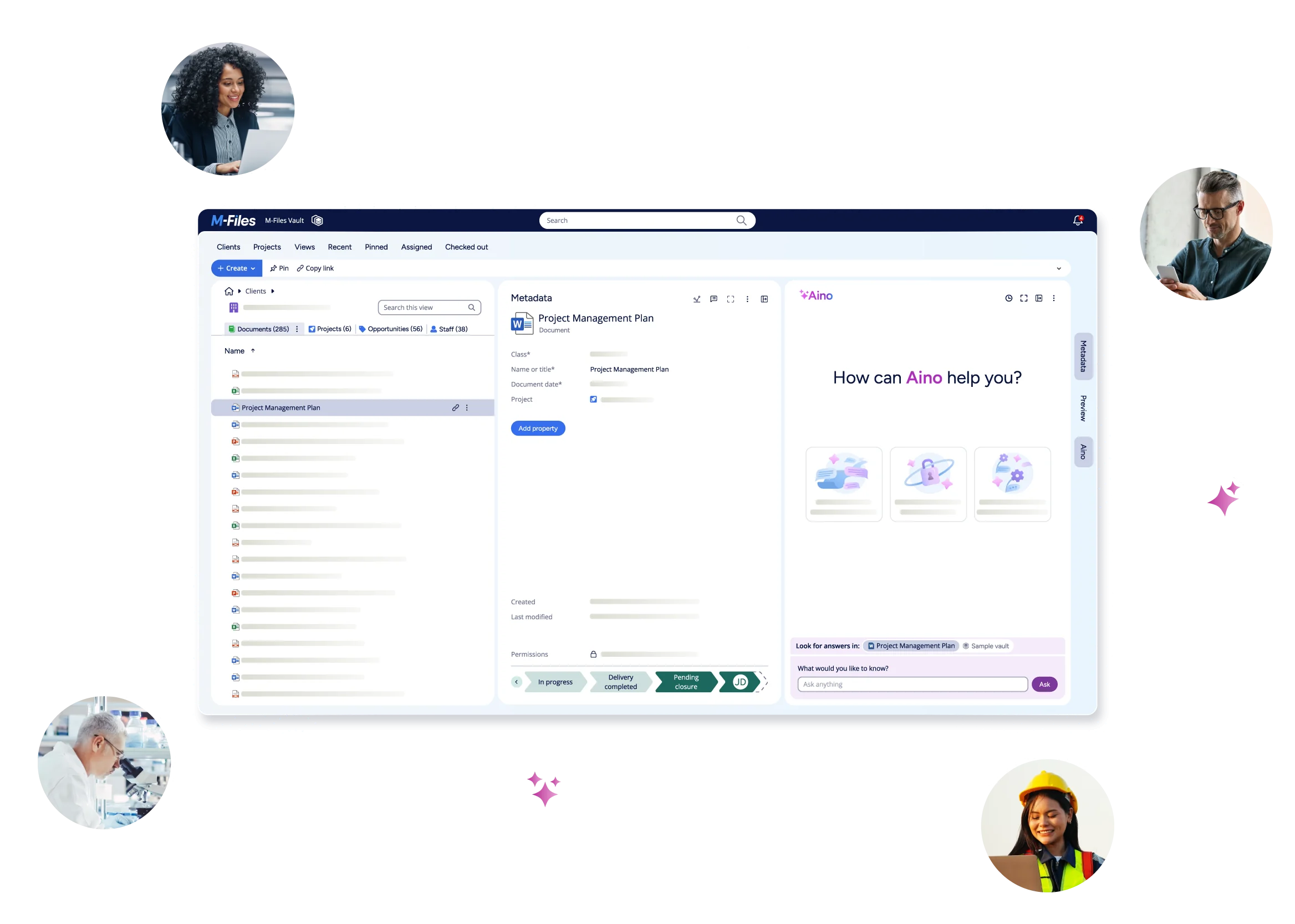
This is where intelligent document management goes beyond storage. M-Files connects documents to customers, contracts, projects, suppliers, assets, approvals, and business processes. That context helps people and AI distinguish an approved policy from a draft, an active agreement from an expired one, or a current procedure from an obsolete version.
Microsoft Work IQ can show what happened across meetings, emails, conversations, and documents. Business context helps explain why that work matters by connecting activity to the customers, projects, and outcomes it supports.
4. Microsoft Provides the Foundation for Secure and Governed AI
Organizations want AI innovation without giving up security, compliance, governance, or control. Microsoft provides an integrated foundation across productivity, collaboration, identity, security, and AI. Microsoft Purview supports data security and compliance for Microsoft 365 Copilot, while SharePoint and SharePoint Embedded provide Microsoft-based content services.
M-Files extends these Microsoft capabilities with business context, workflows, and lifecycle management for high-value information. Together, M-Files and Microsoft 365 help organizations make governed content available in the flow of work.
5. Agent Readiness Starts with Content Readiness
AI agents do more than find and summarize information. They can support workflows and document-driven actions. Organizations preparing for an agentic AI future need information that is properly governed, connected to business processes, and ready to support automated decisions and actions. Before organizations scale these capabilities, the information guiding them should be current, permission-aware, and connected to the relevant process.
Organizations do not need to transform every document. A practical starting point is to:
- Identify the information that matters most.
- Assess its risk and readiness.
- Apply the right governance, ownership, and lifecycle controls.
- Add the business context agents need.
- Make reliable, governed information available to Copilot and AI agents.
From Document Management to AI Readiness
The webinar reinforced a clear connection between AI readiness and document management. Modern document management is not only about storing and finding files. It is about governing essential information, adding business context, and making content usable by people, processes, Copilot, and AI agents.
Organizations that strengthen information governance and context can reduce risk, improve access to authoritative content, and support more reliable AI outcomes. The next practical step is to focus on the information that has the greatest business impact and make it ready for the AI experiences that depend on it.
Latest Articles
Browse Topics
Resources
See M-Files in Action