

AI Governance in Insurance: Risks for UK Insurers
UK Insurers risk AI failures without Stronger information governance
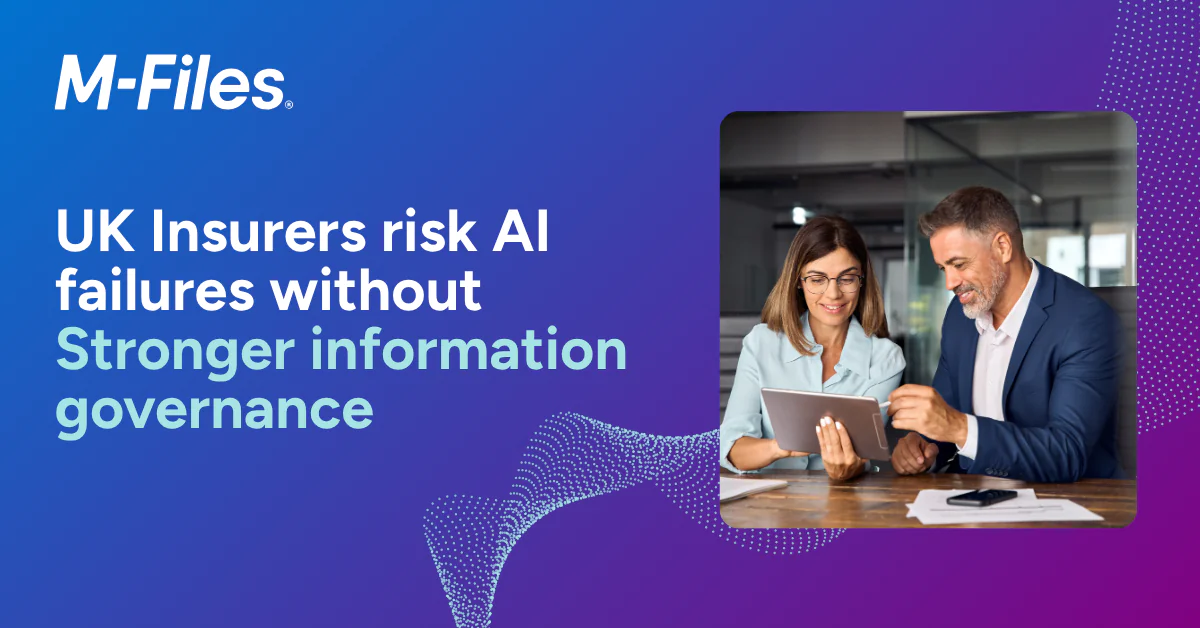

As the UK's Financial Conduct Authority (FCA) this week warned that artificial intelligence will become a defining force in financial services by 2030,there Are growing calls for insurers to act.
The regulator's statement highlighted the need for firms and regulators to keep pace with the technology as adoption accelerates across the industry. As insurers continue to invest in AI-powered underwriting, claims processing and customer service, it is clearer now more than ever that many organisations are overlooking a critical challenge; AI is only as dependable as the information that powers it.
Yohan Lobo, industry solution manager, financial services at M-Files, said many insurers are prioritising AI deployment before establishing the information foundations needed for trusted and compliant AI.
While AI promises greater efficiency and faster decision-making, poor governance can leave insurers exposed to compliance risks, inconsistent outcomes and regulatory scrutiny. Without connected and auditable information, AI systems risk amplifying existing data quality issues rather than solving them.
"AI has enormous potential to transform the insurance industry, but people need to remember that AI doesn't create trust on its own," he explained. "If the information feeding AI systems is flawed, duplicated or lacks context, insurers risk making decisions that are difficult to explain, audit or defend."
As regulators continue to increase expectations around transparency, accountability and explainability in AI-driven decision-making, insurers are under growing pressure to demonstrate how automated decisions are reached.
"Compliance is no longer just about retaining documents or meeting reporting obligations," Lobo continued. "It's about ensuring that the information connected, governed and accessible to ensure every decision is explainable. Without that foundation, insurers will struggle to realise AI's full value while meeting increasing regulatory expectations."
Many insurers continue to operate with information spread across multiple systems and departments, making it difficult for both employees and AI applications to access reliable and contextual information. As AI adoption increases, these disconnected information environments risk becoming a significant operational and compliance challenge.
"Its not that insurers don't have enough information it's that the information isn't easy to find, access, use or maintain," he added. "Success with AI depends on giving people and AI alike access to the right information, in the right context, at the right time. That's what enables organisations to make faster, better and more defensible decisions."
Lobo said rather than viewing information governance as simply a compliance requirement, insurers should see it as the foundation for trusted AI.
"By connecting information across the organisation, maintaining clear governance policies and ensuring every decision is supported by accurate, auditable and contextual information, organisations can embrace AI with greater confidence while reducing operational and regulatory risk," he concluded. "The organisations that succeed will not simply be those that deploy AI first, but those that build it on a foundation of trusted information, strong governance and contextual intelligence."
Latest Articles

Browse Topics
Resources

See M-Files in Action