
AI Contract Review: From Insight to Action
How M-Files AI Moves Contract Review from Insight to Action

Contracts rarely arrive at a convenient time or follow standard procedures.
It seems like new customer agreements always come through while legal is managing a large queue of reviews, suppliers send their own terms instead of accepting the company's standard language, and renewals return with changes buried several pages deep.
The biggest challenge is comparing the terms against internal requirements and deciding what happens next. AI creates an opportunity to change that model, but only if the AI is an active participant.
Making the best decisions in the contract review process
An experienced contract reviewer knows what to look for because they've completed the process multiple times, learning something new each time to improve their skillset. They understand which clauses are expected, which deviations matter, and which issues should trigger additional scrutiny.
Traditional automation is helpful when information and decisions follow predictable rules, but contract language doesn't always cooperate. For example, a limitation of liability provision may appear in different locations or use different language from one contract to another. Payment terms may look acceptable at first glance but differ from the organization's preferred terms. Expected provisions may be absent altogether.
In the typical process, organizations have to manually scrutinize every agreement or risk important exceptions slipping through the cracks.
That changes when they can apply historical business context to the process, letting AI perform the repetitive first-line analysis and routing any exceptions for review.
Meet the M-Files Contract Risk Review Agent
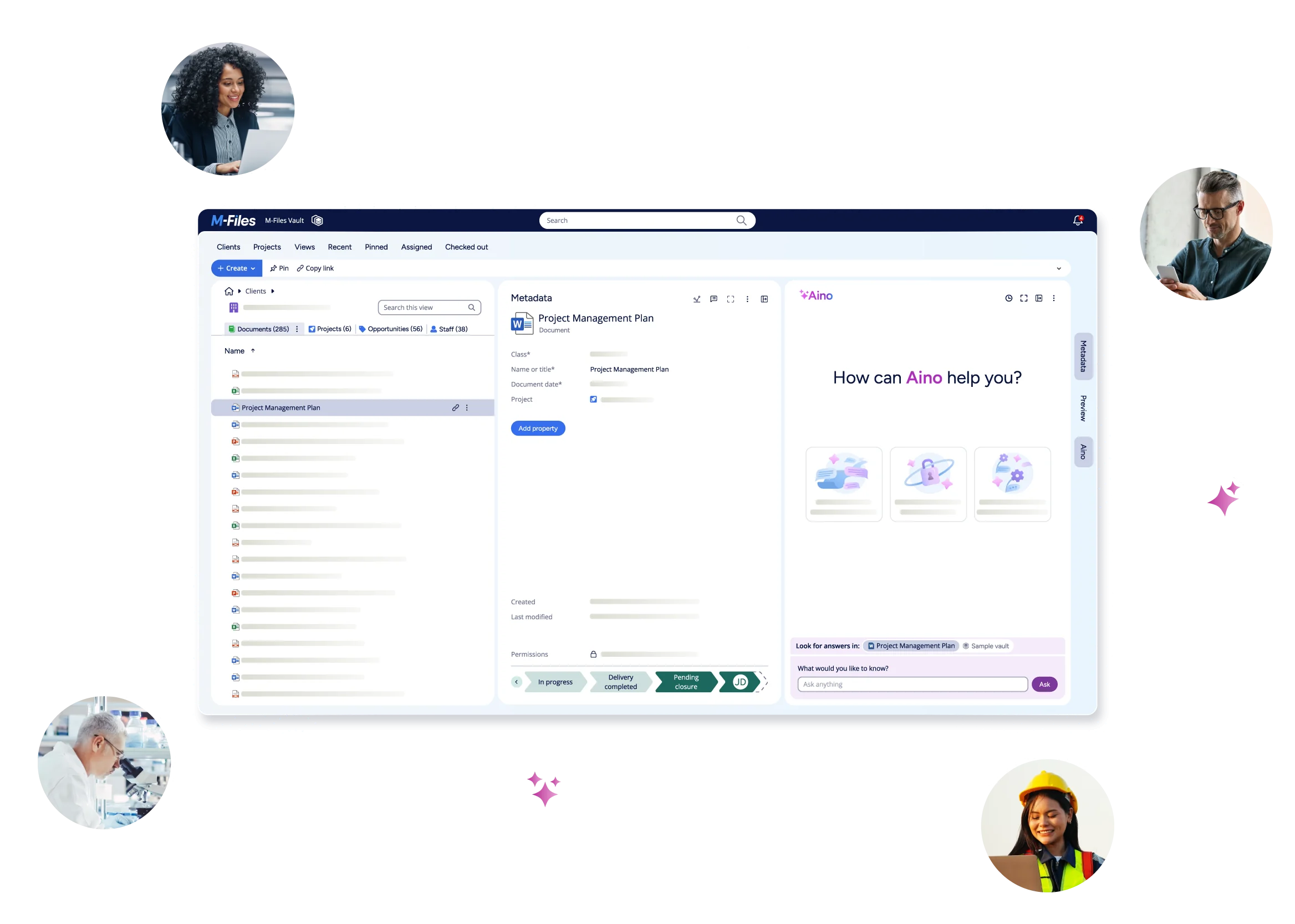
M-Files introduced Custom Agents earlier this year that automate workflow steps that depend on reading content and making decisions. One area where customers and prospects have expressed interest is for a Contract Risk Review agent.
When building a Contract Risk Review agent, organizations can define the requirements they want the agent to evaluate and when the incoming contract enters M-Files, the agent analyzes the agreement against those predefined requirements.
For example, the agent could evaluate whether expected clauses are present, identify terms that deviate from organizational standards, extract relevant contract information and flag provisions requiring additional attention. Additionally, the agent can also evaluate areas such as limitation of liability and use its analysis to establish a risk level for the agreement.
That's where the important shift happens to understand, judge, then act, rather than simply review and summarize a contract.
- Understand: First, the agent interprets the contract. Instead of relying solely on the location of a field or an exact phrase, M-Files AI analyzes the content to identify relevant clauses, terms, and agreement information. The goal is to undersant the information needed for the process.
- Judge: Next, the agent evaluates what it finds compared to the organization's predefined requirements.
- Is a required clause missing?
- Do payment terms deviate from the organization's standard?
- Does a provision require additional scrutiny?
- Does the combination of issues elevate the contract's risk?
This is where M-Files AI turns knowledge that traditionally lives in people's heads into repeatable criteria within the contract process, applying the organization's defined requirements consistently so experts can quickly review where their expertise is needed.
- Act: Finally, the analysis becomes actionable. If the contract meets the defined requirements, it can continue through the appropriate workflow. If the agent identifies an exception, it flags the issue. If the agreement meets the organization's criteria for high risk, the workflow routes the contract to legal for review.
Turning Context into AI-Assisted Action
A contract isn't valuable because of the words on the pages. It has relationships: a customer or vendor, an agreement type, a project, an owner, an approval process, and the organization's business requirements.
M-Files is built on an enterprise object graph that links business context and creates the foundation that allows AI to work with governed business information.
The Next Step for Enterprise AI Is Action
The first wave of generative AI showed organizations how quickly AI could read, summarize, and answer questions about information. Summarizing a contract is useful, but knowing the contract violates a term within a defined business requirement and using that determination to initiate the appropriate review process is where AI starts changing how work gets done.
The contract review process illustrates one valuable use case for how M-Files Custom helps organizations put AI at a decision point. We'll review additional enterprise AI use cases that will help organization remove operational friction, achieve a performance advantage and advance in their AI journeys.
Latest Articles
Browse Topics
Resources
See M-Files in Action