

ECM Trends: AI, Cloud, and Content Services
The Future of ECM: Content Services, AI, and Emerging Trends


Enterprise Content Management is changing quickly as organizations demand faster, safer, and more flexible ways to handle information. Modern ECM systems focus on more than document storage. They connect content management processes with business operations, improve data governance, and support regulatory compliance. The future points toward content services, AI, and cloud-based solutions that make ECM platforms more intelligent and easier to adopt.
What is a Content Services Platform (CSP) and how does it relate to ECM?
A Content Services Platform is an evolution of traditional enterprise content management systems. While ECM software focused on storing and controlling documents, CSPs expand the scope to include services that deliver content across other business systems.
A CSP still supports document management, records management, and data security. The difference is flexibility. CSPs integrate with existing systems, support workflow automation, and allow remote access to information without disrupting established business processes. For many organizations, a CSP represents the next stage of ECM solutions, providing both governance and agility.
How are AI and machine learning used in modern ECM systems?
Artificial intelligence and machine learning are becoming essential to ECM software. They help automate routine content management processes and improve operational efficiency.
Examples include:
- Intelligent document processing to classify documents automatically
- Data extraction from invoices, contracts, or forms with minimal manual input
- Detection of sensitive data to strengthen compliance and access controls
- Predictive analytics that identify workflow bottlenecks and improve efficiency
By applying AI, an ECM system reduces errors, lowers costs, and improves the way information supports business operations.
What are the current trends in Enterprise Content Management?
Enterprise Content Management continues to adapt to business needs. Several trends define the current direction of ECM platforms:
- Increased adoption of cloud-based solutions for scalability and remote access
- Tighter integration with other business systems such as ERP and CRM
- Greater focus on data governance and regulatory compliance
- Stronger protections against data breaches through improved access controls and monitoring
- Emphasis on user adoption with interfaces that are easier to learn and use
These trends show that ECM is shifting from static document storage to active business enablement.
How does ECM support digital transformation initiatives?
Digital transformation depends on information flowing smoothly across an organization. Enterprise Content Management systems play a central role by replacing paper processes, reducing reliance on email, and connecting content with digital workflows.
An ECM platform ensures that documents are secure, searchable, and tied to the right business processes. By linking records management, workflow automation, and document management, ECM solutions improve collaboration, lower compliance risk, and support faster decision-making. These gains contribute directly to digital transformation goals such as operational efficiency and agility.
What is the future of ECM (Enterprise Content Management)?
The future of ECM is shaped by cloud, AI, and content services. Organizations are moving toward platforms that combine strong governance with flexibility. ECM solutions are expected to deliver:
- Deeper integration with other business systems for end-to-end process support
- Smarter workflow automation driven by AI and intelligent document processing
- Stronger data security to reduce the risk of data breaches
- More focus on remote access and mobile work support
- Expanded records management and compliance features to meet growing regulations
Enterprise Content Management will continue to evolve from a system of record into a platform that actively drives business operations.
How can I develop a successful ECM strategy for my organization?
Developing an ECM strategy starts with a clear understanding of your goals. Focus on how an ECM solution will improve business processes, strengthen regulatory compliance, and reduce risk.
Steps to consider include:
- Assess current content management processes and identify gaps
- Define goals such as improving operational efficiency, reducing data breaches, or enhancing user adoption
- Plan the implementation process, including data migration and integration with existing systems
- Select an ECM platform that supports cloud-based solutions, workflow automation, and strong access controls
- Provide training and change management to encourage user adoption and long-term success
By following these steps, you build a strategy that connects enterprise content management directly to measurable business outcomes.
Looking Ahead: Turn Your ECM Vision Into Action
Enterprise Content Management is moving toward smarter, more connected platforms. Advances in AI, content services, and cloud-based solutions are making ECM systems more effective at protecting sensitive data, improving records management, and supporting business operations. Organizations that invest in modern ECM solutions position themselves for stronger data governance, better compliance, and higher operational efficiency.
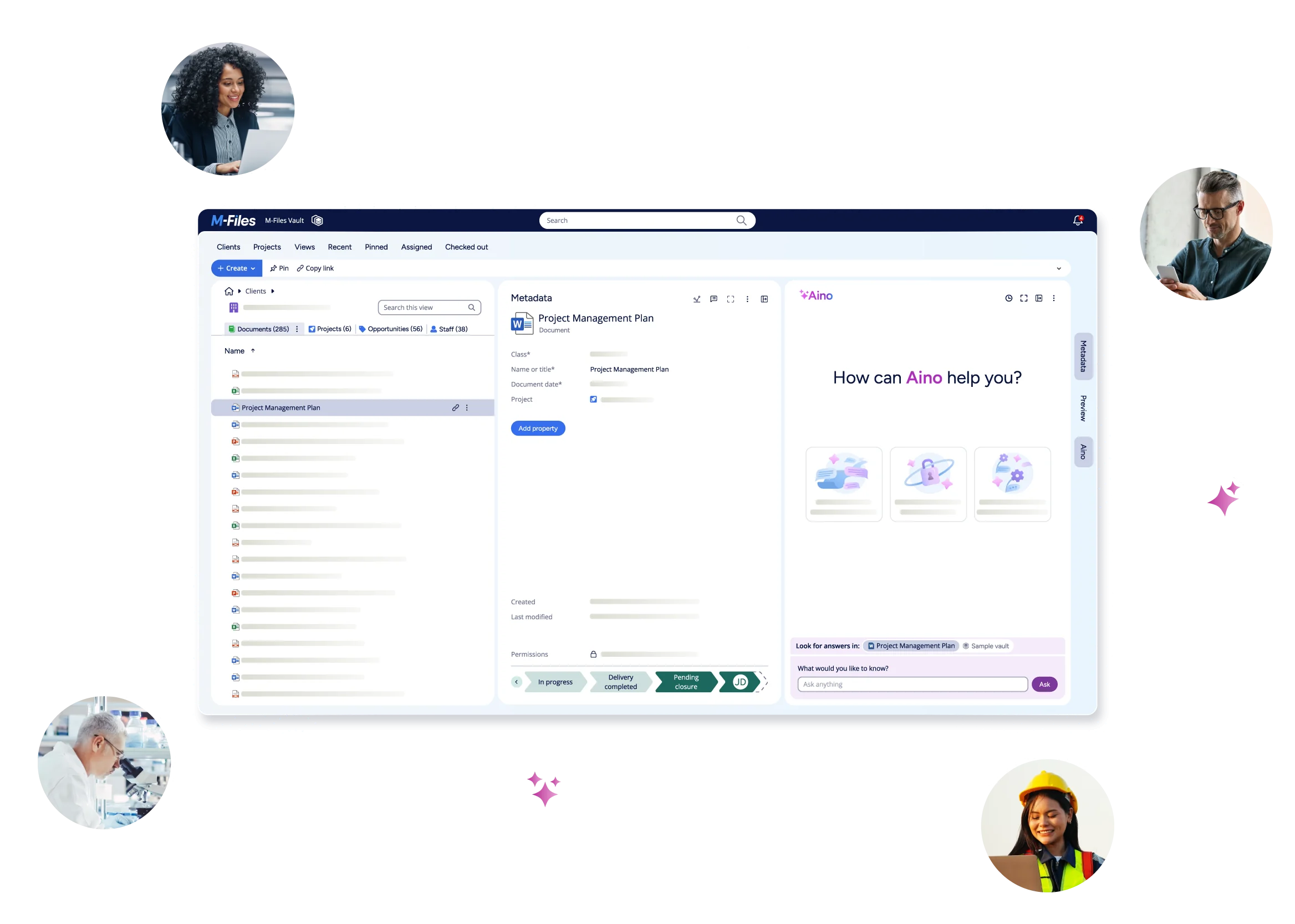
See how M-Files leads this future. Our metadata-driven ECM platform supports workflow automation, remote access, and data security while integrating with other business systems. Start your free trial today and experience how M-Files transforms enterprise content management.
Latest Articles

Browse Topics
Resources
See M-Files in Action