

What Is Enterprise Content Management (ECM)?

Enterprise Content Management (ECM): What It Is and Why It Matters
Enterprise Content Management (ECM) helps organizations capture, organize, store, and secure business content. It takes documents, emails, images, and records out of scattered folders, inboxes, and paper files, and brings them into a single controlled system.
With ECM, information is searchable, secure, and accessible to the right people at the right time. The result is better efficiency, lower risk, and more consistent operations.
What is Enterprise Content Management (ECM)?
ECM is both a strategy and a set of technologies for managing content throughout its lifecycle. It covers how information is created, classified, secured, accessed, and archived.
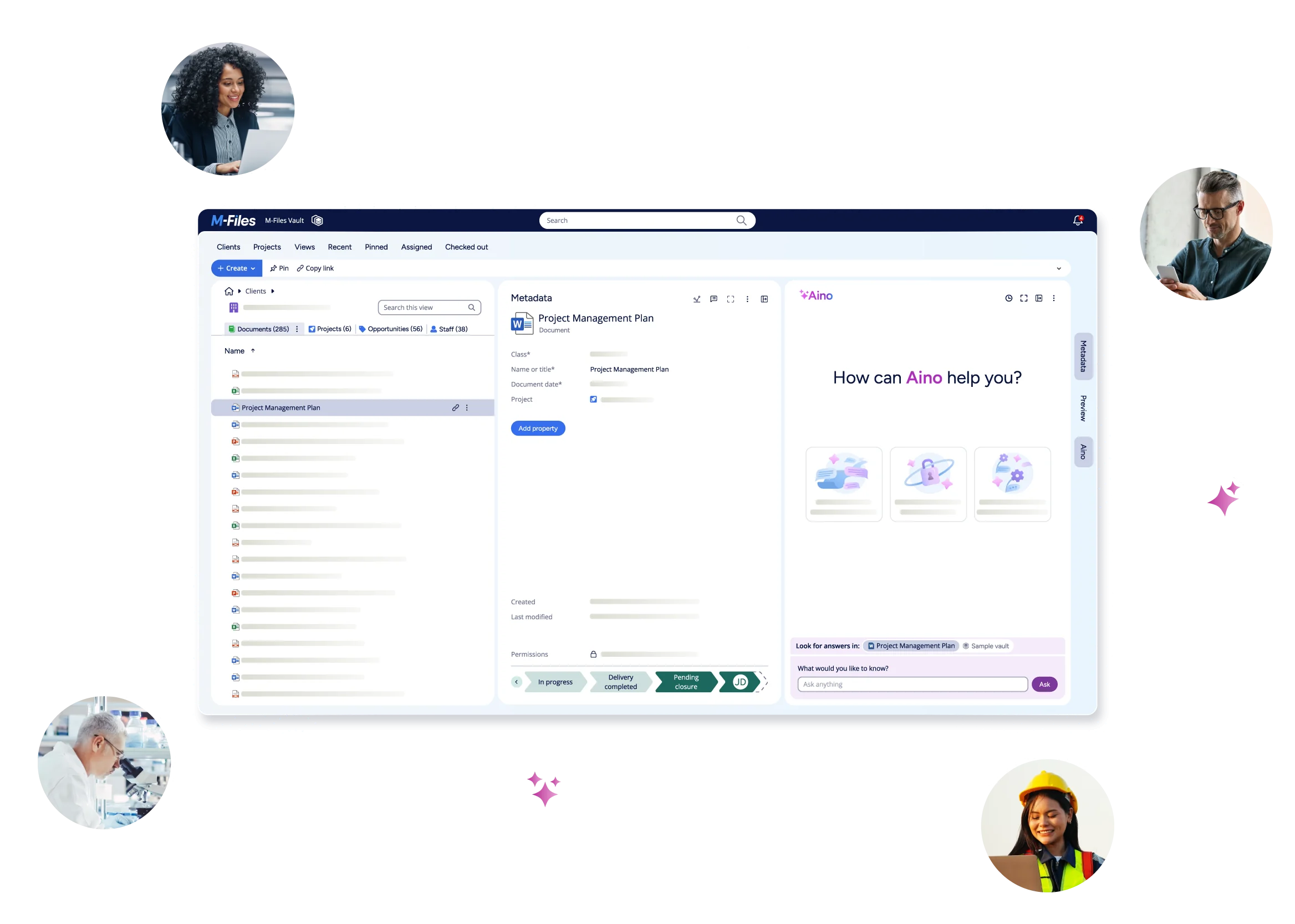
Instead of letting files sit in silos, ECM centralizes them. Teams can manage contracts, invoices, HR records, marketing assets, case files, and more. Some systems use folder structures, while others (like M-Files) use metadata, allowing you to search by what a file is about instead of where it is saved.
This approach reduces wasted time, avoids duplicate work, and strengthens compliance.
How does an ECM system work and what are its key components?
An ECM platform combines several functions into one cycle:
- Capture: Bring in information from paper scans, emails, uploads, or connected systems. OCR and metadata tagging help classify content at the point of entry.
- Manage: Organize documents with metadata, apply version control, automate workflows, and enforce permissions.
- Store: Securely hold active files in repositories where they can be searched and used.
- Preserve: Archive records for the long term with retention rules and compliance safeguards.
- Deliver: Provide information to employees, customers, or integrated applications through search, portals, or APIs.
These components ensure information isn’t only stored but actively managed across its entire lifecycle.
What types of content can an ECM manage?
Modern ECM systems handle nearly every type of unstructured content, including:
- Word documents, PDFs, and spreadsheets
- Emails and attachments
- Scanned images and forms
- Presentations, design files, and graphics
- Photos, videos, and audio
- Web content and digital assets
By consolidating these formats, ECM reduces duplication and creates a trusted, single source of truth.
It also bridges structured and unstructured data. While structured data lives in databases like ERP or CRM, most business information is unstructured. ECM makes unstructured information organized, searchable, and usable.
Who needs ECM, or which businesses and departments benefit from it?
Any organization that depends on documents or records gains value from ECM. Examples include:
- Finance: invoices, purchase orders, audits
- HR: employee records, onboarding documents, training files
- Legal: contracts, compliance files, case records
- Sales and Marketing: proposals, presentations, collateral
- Customer Service: account files, support records
Heavily regulated industries such as healthcare, financial services, and government often adopt ECM to meet compliance standards. But smaller businesses also benefit. Even without strict regulations, ECM improves daily efficiency by keeping information consistent, secure, and easy to access.
Why is Enterprise Content Management important for businesses?
ECM addresses common problems that slow organizations down. It:
- Saves time by making files easier to find
- Cuts costs by reducing paper and manual processes
- Strengthens compliance with audit trails and retention policies
- Improves security through controlled access and backups
- Supports collaboration with version tracking and workflow automation
In practice, ECM becomes the backbone of daily operations. It creates order, reduces risk, and ensures information is available when it’s needed most.
How is ECM different from using basic cloud storage or file-sharing tools?
Cloud storage tools like Google Drive or Dropbox make it simple to save and share files. But they lack the advanced management needed in an enterprise. Likewise, other content platforms such as document management or digital asset management systems each handle part of the picture — but not the full scope of ECM.
ECM provides:
- Metadata and advanced search for faster retrieval
- Workflow automation to move documents through approvals
- Records management with retention schedules and legal holds
- Granular permissions and detailed audit trails
- Integration with ERP, CRM, and other enterprise systems
Cloud drives are useful for basic storage. ECM is a complete system for managing content across its entire lifecycle.
Your Next Step Toward Smarter Content Management
Enterprise Content Management gives businesses a reliable way to manage information from creation to long-term retention. It keeps content organized, applies consistent rules, and supports both compliance and productivity. Companies that adopt ECM reduce waste, protect sensitive data, and make information easier to use across teams and departments.
Want a deeper look at how Enterprise Content Management transforms business operations? Explore Enterprise Content Management: The Complete Guide to learn about key components, benefits, and best practices for implementation.
Latest Articles


Browse Topics
Resources
See M-Files in Action