

Holmes Murphy
How Holmes Murphy Replaced Disconnected Systems with a Unified Client Experience Using M-Files
Highlights
- Unified client experience and improved efficiency through Salesforce: M-Files embedded in Salesforce eliminates switching between systems, reduces manual work and creates a more seamless way of working.
- Stronger compliance and control over data: Centralized document management improves governance and supports regulatory requirements such as HIPAA, GLBA and CCPA.
- Fast time to value with future-ready foundation: Early benefits realized within weeks, with structured content enabling AI, automation and advanced analytics.

Use Case
Quality Management
Risk and Compliance Management
Industry
Commercial Insurance & Risk Management
Country
United States
Share This Story
Company Introduction
Holmes Murphy is one of the largest privately held insurance brokers in the United States, serving clients across all 50 states. With offices across the Midwest and beyond, the company provides property and casualty insurance, employee benefits and a range of complementary services through its group of affiliated businesses.
Operating in a highly data- and document-intensive environment, Holmes Murphy manages large volumes of client information across the full insurance lifecycle. The objective was not simply to improve document management, but to fundamentally transform how employees work and how clients are served.
“We wanted to truly disrupt and evolve the way brokers think about supporting their clients,” says Dave Ashton, Chief Information Officer at Holmes Murphy.
Key Challenges Before M-Files
Disconnected Systems and Fragmented Information
Before M-Files, document management at Holmes Murphy was spread across multiple systems, including legacy platforms, file shares, email and Microsoft SharePoint. There was no single system of record, and documents were often duplicated, inconsistently stored or difficult to locate.
This fragmentation made it harder for employees to trust the information they were working with and slowed down everyday operations. Finding the right document often meant searching across several systems, increasing both time and frustration.
Multiple Systems Disrupting Workflow Efficiency
Employees frequently had to move between multiple systems to complete a single task. In some cases, they were working across as many as nine different platforms.
This fragmented experience reduced productivity and interrupted workflows. Instead of focusing on client needs, employees spent time navigating systems and managing information manually.

Compliance Pressures Without Central Control
As a regulated organization, Holmes Murphy must comply with healthcare, financial and data privacy regulations, including HIPAA, GLBA and CCPA. Without centralized document management, it became increasingly difficult to control access, retention and data security.
“The driver of all this was getting our legal and privacy officer very comfortable that we were able to manage our documents and the retention and access,” Dave notes.
At the same time, the existing document system was aging and lacked the flexibility needed to support modernization.
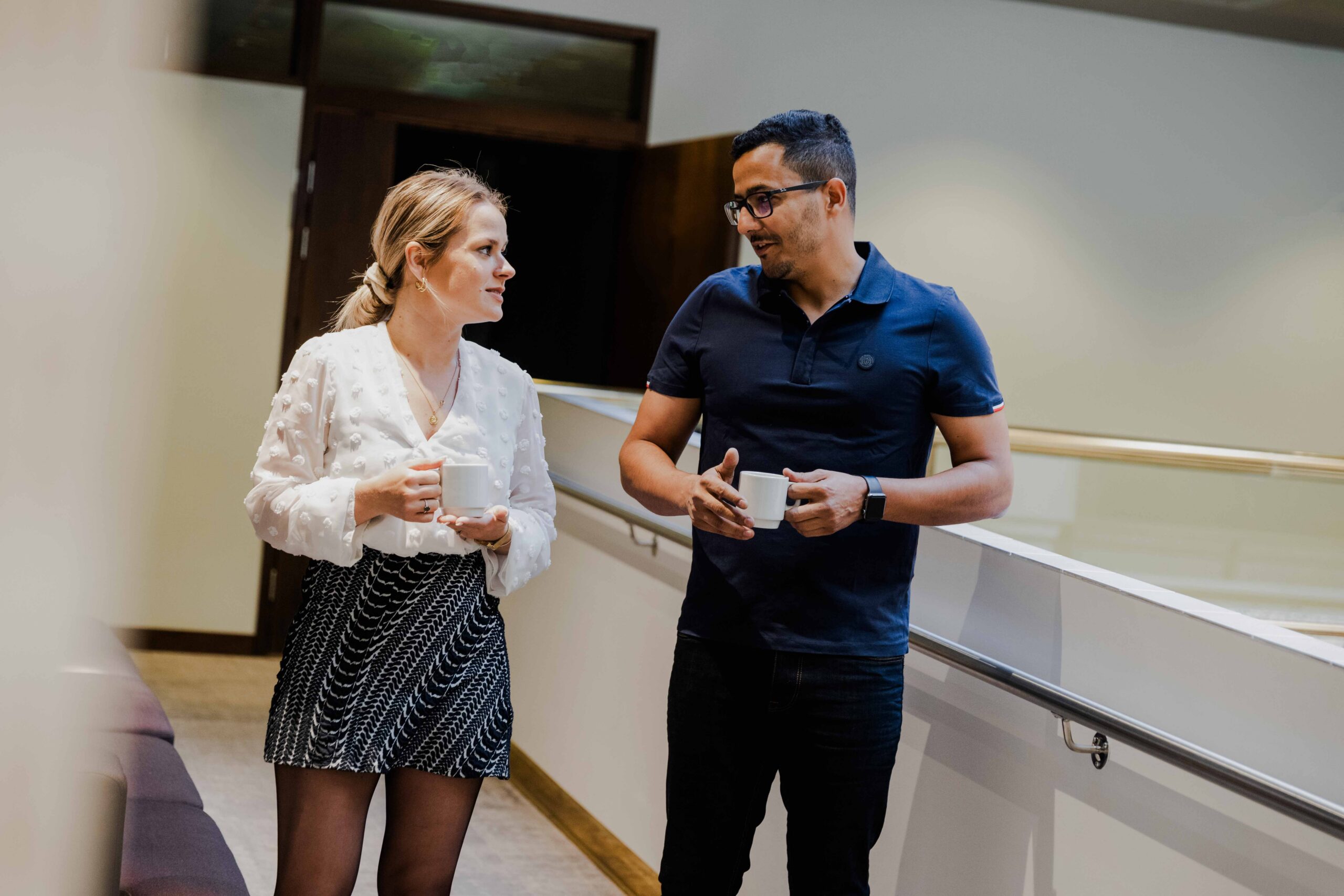
"It’s all in one experience, all single sign-on. One experience instead of moving between systems."
Dave Ashton, Chief Information Officer, Holmes Murphy
The M-Files Solution
Creating a Unified Platform for Work and Information
M-Files was implemented as part of Holmes Murphy’s broader Holmes Base initiative, designed to bring document management, workflows, data analysis and the policy lifecycle into one connected ecosystem.
Holmes Murphy went live with M-Files for its property and casualty insurance business, its largest business area, just a few weeks prior to this presentation. While still early in the rollout, the impact on how employees access and manage information is already visible.
Extending Salesforce with M-Files for a Unified Way of Working
At the core of the solution is Salesforce, which Holmes Murphy uses as its primary servicing platform. M-Files is fully embedded within Salesforce, allowing employees to access and manage documents without leaving their main workspace.
“It’s all in one experience, all single sign-on. One experience instead of moving between systems,” Dave explains.
This integration removes the need to switch between systems and creates a more seamless, efficient workflow.
Shifting from Folder-Based to Context-First Document Management
M-Files introduces a context-first approach to document management, where information is organized based on what it is and how it relates to the business. Instead of relying on inconsistent folder structures, documents are classified by context such as client, policy or process.
As a result, information is easier to find, more consistent and better controlled across the organization, while also strengthening governance and reducing the risk of errors.
Driving Adoption in a Changing Environment
Recognizing the scale of change, Holmes Murphy invested heavily in onboarding and training. The company prioritized user readiness by dedicating additional time ahead of go-live to support a smooth and successful rollout.
Training included hands-on sessions, role-based learning and the use of champions within each department. This strong foundation helped users quickly adapt, while ongoing support continues to reinforce adoption and long-term value.
The Results
A Single Experience Across Systems and Data
By embedding M-Files into Salesforce, Holmes Murphy has created a unified way of working. Employees can now access documents, data and workflows in a single environment, eliminating the need to switch between systems.
Even within the first few weeks, this has improved efficiency and simplified daily work across teams.
Bringing Control to Sensitive Client Data
M-Files provides centralized control over document storage, access and retention, enabling Holmes Murphy to better manage sensitive client information and meet regulatory requirements with greater confidence.
The organization now has clearer visibility into where data resides and who has access to it, reducing risk and strengthening compliance.
Freeing Up Time for Client Work
With faster access to information and fewer manual processes, employees spend less time searching for documents and more time focusing on delivering value to clients.
“This is a much better use of our money. We’re working with modern, integrable platforms that give us access to data and scalability,” Dave adds.
This shift improves both productivity and the overall client experience.

"This is a much better use of our money. We’re working with modern, integrable platforms that give us access to data and scalability."
Dave Ashton, Chief Information Officer, Holmes Murphy
Helping Employees Work More Efficiently and Serve Clients Better
The improved user experience has already made a noticeable difference. Employees can find documents more easily, work more efficiently and respond more quickly to client needs.
Early feedback highlights ease of use, improved search capabilities and the benefit of having everything in one place.
Building a Foundation for AI and Automation
With structured and centralized content now in place, Holmes Murphy is well positioned to take advantage of AI and automation. The company is exploring the use of Microsoft Copilot and advanced analytics to further enhance how information is used.
“That’s a game changer that will open up a lot of new opportunities,” Dave says.
M-Files provides the foundation for these next steps.
Looking Ahead: Expanding M-Files and Advancing AI Capabilities
Holmes Murphy plans to expand M-Files across the entire company, creating a single system of record for all documents. The organization is also focused on strengthening governance, deepening integrations and advancing its use of AI.
With early results already visible just weeks after go-live, Holmes Murphy is well positioned to continue modernizing its operations and delivering a more connected, efficient and forward-looking client experience.

See M-Files in Action
Seeing is believing. Request a live demo to discover how AI-powered document management in context can transform your organization.