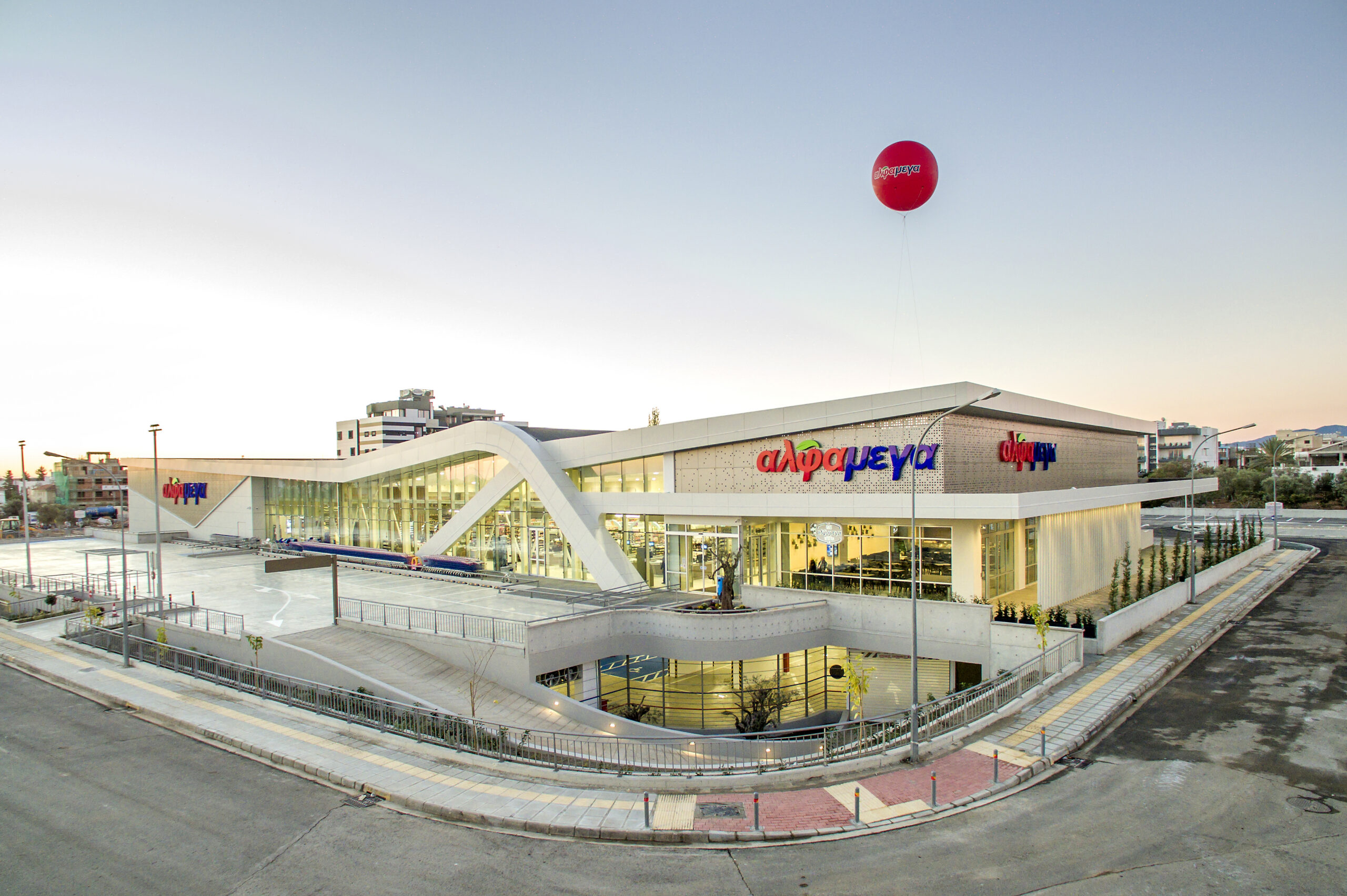
Alphamega
Alphamega Accelerates Financial, Procurement, and Operational Processes with M-Files
Highlights
- Millions in annual supplier-related transactions managed through connected workflows, including promotions, rebates, and agreements.
- Real-time visibility into expected income and financial commitments across Purchasing and Finance.
- Unified, context-driven processes connecting 21 stores, 2 warehouses, eCommerce operations, and 20+ coffee shop locations.

Use Case
Process Management
Quality Management
Supplier Information Management
Industry
Retail
Country
Cyprus
Share This Story
Company Introduction
Alphamega is one of the largest supermarket chains in Cyprus, with a presence in four major cities and expansion plans underway for a fifth. The company operates 21 stores, two central warehouses, and an eCommerce shop. In addition, the Bean Bar coffee chain, with more than 20 locations, is part of the Alphamega group.
As the business expanded, Alphamega needed a scalable way to manage increasing volumes of documents, financial transactions, and cross-departmental processes, while ensuring that information remained connected and accessible across the organization.
Key Challenges Before M-Files
Fragmented Information and Paper-Based Processes
Before implementing M-Files, Alphamega relied heavily on paper-based processes and disconnected systems. Purchase invoices were physically scanned by M-Files' partner Iron Mountain and accessed separately, while employee records and supplier agreements were stored in different locations without a unified structure.
Because documents were not connected to the processes or business entities they related to, retrieving and managing information was time-consuming and inefficient.
Limited Visibility into Financial and Supplier Processes
Finance and Purchasing teams lacked a clear, real-time view of supplier agreements, promotions, and expected income. Key processes such as rebates, event planning, and supplier contracts were difficult to track holistically.
Without connected information, it was challenging to understand what income was expected, whether agreements were being fulfilled, and how financial commitments aligned with business activities.

"Instead of searching in files and folders, we now start directly from the Employee or process and see everything related to it in one place. We’ve managed to have a single source of truth for our data!"
Athena Neophytou, HR Assistant Manager, Alphamega
Managing Complex, High-Volume Processes
Alphamega manages millions in supplier-related transactions annually, particularly around promotions and agreements. These processes involve multiple steps, approvals, and stakeholders, making them difficult to manage without structured workflows and connected data.
Tracking agreements, monitoring their execution, and reconciling financial outcomes required significant manual effort and coordination.
Cross-Department Coordination Challenges
Core processes, such as imports, supplier deliveries, and financial operations, involve multiple departments including Purchasing, Warehousing, Stock Control, Imports, and Finance. Without a shared system, coordination relied on emails and manual follow-ups, increasing the risk of delays and miscommunication.
Legacy Systems Without Process Connectivity
While Alphamega’s ERP system remained essential for financial management, it could not support the level of process automation, integration, and information connectivity required. Documents, data, and workflows remained separate, limiting efficiency and visibility.

"Shifting to workflow automation has accelerated efficiency, improved processing times, and enhanced the consistency in approvals. By reducing manual intervention, we are minimizing errors and freeing up our teams to focus on more strategic initiatives."
Andreas Demetriou, CIO, Alphamega
The M-Files Solution
From Scanning to Context-First Platform
Alphamega began using M-Files in 2016 as a scan-and-view solution for purchase invoices. Over time, the platform evolved into a context-first system where documents are connected to business objects such as suppliers, employees, agreements, and transactions.
Instead of navigating folders, users can access all relevant information through its business context, enabling a unified view of documents, data, and workflows.
End-to-End HR Solution
One of the first major expansions was in the HR department, where Alphamega digitized all employee records and integrated M-Files with the existing HR system. This enabled the creation of a complete HR solution covering applicant workflows, recruitment, and employment.
All employee-related information is now connected and accessible within the same context, improving efficiency and consistency.
Finance-Led Process Automation
The Finance department has been a key driver of M-Files adoption, continuously expanding its use across processes. M-Files manages the full lifecycle of expense invoices, from OCR and AI-based data capture to approvals and ERP posting through integration.
It also supports invoice issuance, gift certificate management, and standardized payment processes. Payments are integrated via Jinius Business, a digital platform by the Bank of Cyprus that enables automated transactions and real-time status updates.
Additional treasury processes provide visibility into store-level cash operations, allowing Finance to monitor cashiers and supervisors through daily checks. Reporting is run daily, giving a clear view of outstanding transactions and financial status.
Advanced Purchasing and Revenue Management
M-Files plays a central role in the Purchasing department by managing supplier agreements, and all supplier-related processes such as rebates, promotions and agreements. The solution organizes promotional data, automatically generates agreements using VAF, and routes them for approval and signing via Docusign.
Additional solutions have been implemented for booking advertising locations on the eCommerce platform, event planning for promotional activities, rebate management. These processes are connected, giving Finance and Purchasing full visibility into expected income and enabling them to track execution against agreements.
Integrated Logistics and Import Management
Alphamega uses M-Files to manage imports by creating orders and tracking containers within the system. Through integration with CARGOES Flow by DP World, shipment data such as estimated arrival times is automatically updated.
The solution connects multiple departments, including Imports, Warehousing, Stock Control, Purchasing, and Finance, enabling coordinated workflows for receiving goods, calculating costs, and processing payments.
A similar approach is used for local supplier deliveries to central warehouses, improving planning, coordination, and operational efficiency.
The Results
Information Connected Through Business Context
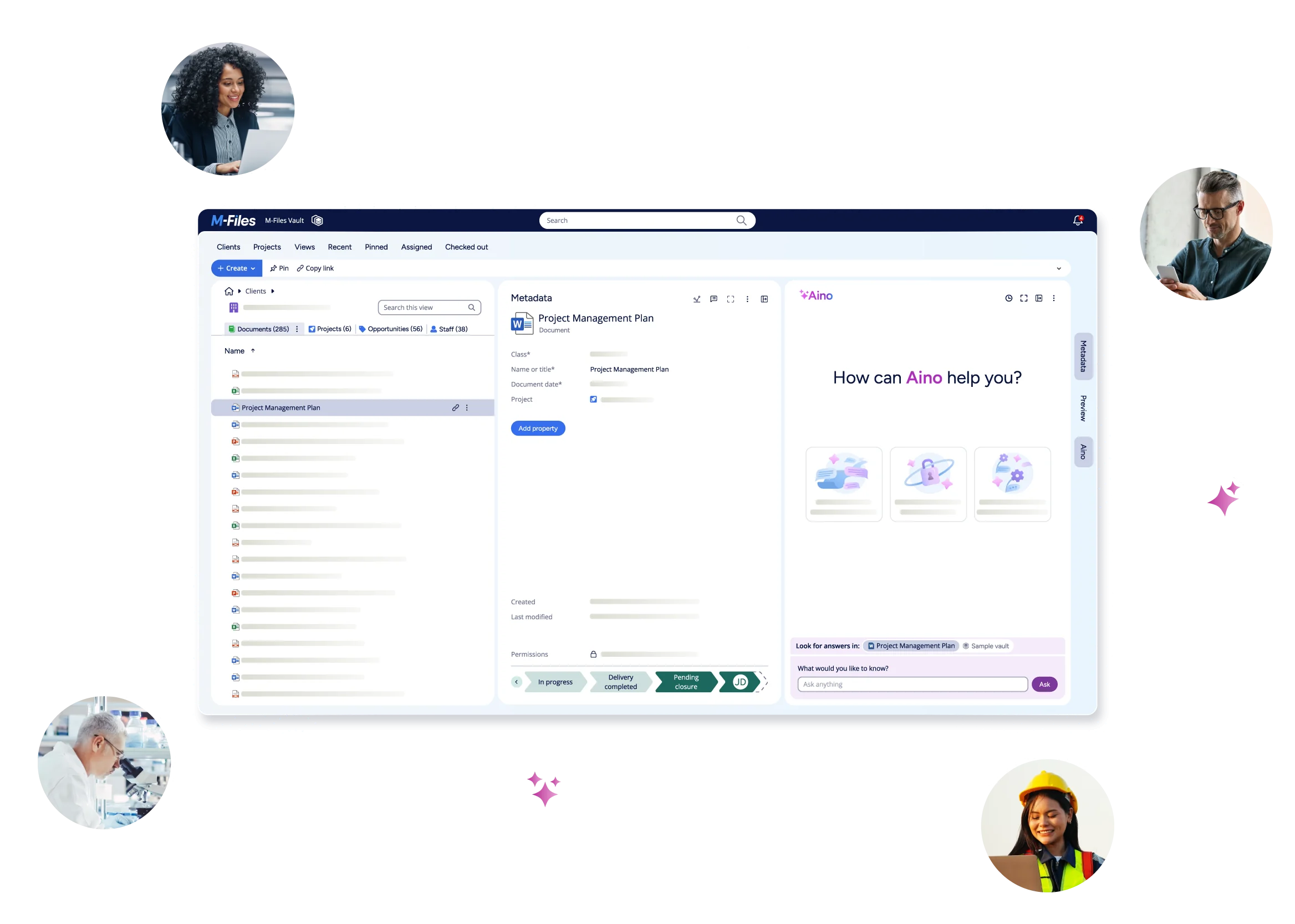
M-Files has transformed Alphamega’s approach to information by connecting documents, data, and workflows to their business context. Instead of searching across systems, users can access all relevant information related to a supplier, agreement, shipment, or transaction in one place.
“Instead of searching in files and folders, we now start directly from the Employee or process and see everything related to it in one place. We’ve managed to have a single source of truth for our data!” said Athena Neophytou, HR Assistant Manager at Alphamega.
Full Visibility of Revenue and Financial Processes
Finance and Purchasing now have a clear, real-time view of supplier agreements, promotions, rebates, and expected income. This visibility allows them to track commitments, monitor execution, and improve forecasting accuracy.
“We now have a clear view of expected income and can monitor whether all agreement terms are fulfilled,” said Christos Panteli, CFO at Alphamega.

"We now have a clear view of expected income and can monitor whether all agreement terms are fulfilled."
Christos Panteli, CFO, Alphamega
Improved Efficiency Across High-Volume Operations
Managing millions in annual transactions is now streamlined through automated and connected workflows. Processes that previously required manual coordination are handled within structured workflows, reducing processing time and improving consistency.
“Shifting to workflow automation has accelerated efficiency, improved processing times, and enhanced the consistency in approvals. By reducing manual intervention, we are minimizing errors and freeing up our teams to focus on more strategic initiatives,” said Andreas Demetriou, CIO at Alphamega.
Seamless Cross-Department Collaboration
By connecting processes across departments, M-Files has improved coordination between teams involved in finance, imports, warehousing and purchasing. Each stakeholder can access the same up-to-date information within the process context, reducing delays and miscommunication.
“M-Files has improved communication between departments by ensuring everyone works with the same information,” said Silia Soteriou, Head of Enterprise Applications at Alphamega.
Reduced Risk and Increased Control
Standardized workflows and full traceability have minimized the risk of errors, missing approvals, and untracked transactions. Financial processes are now more controlled, auditable, and reliable.
Scalable Platform Supporting Continuous Development
M-Files has become a central platform that complements Alphamega’s existing ERP system, enabling continuous process development across departments. As new needs arise, the platform can be extended to support additional use cases while maintaining a consistent, connected information environment.
“M-Files plays a key role in managing complex processes at scale while giving us the control and visibility we need,” Silia concludes.
Partner
Iron Mountain Cyprus
Trusted by more than 240,000 organizations around the world, and with a real estate network of more than 85 million square feet across more than 1,400 facilities in over 50 countries, Iron Mountain stores and protects billions of valued assets, including critical business information, highly sensitive data, and cultural and historical artifacts. Providing solutions that include information management, digital transformation, secure storage, secure destruction, as well as data centers, cloud services, and art storage and logistics, we help customers lower cost and risk, comply with regulations, recover from disaster, and enable a more digital way of working—and all this with a commitment to sustainability.

Contact

See M-Files in Action
Seeing is believing. Request a live demo to discover how AI-powered document management in context can transform your organization.