
Intelligent Metadata Layer | M-Files

Intelligent Metadata Layer

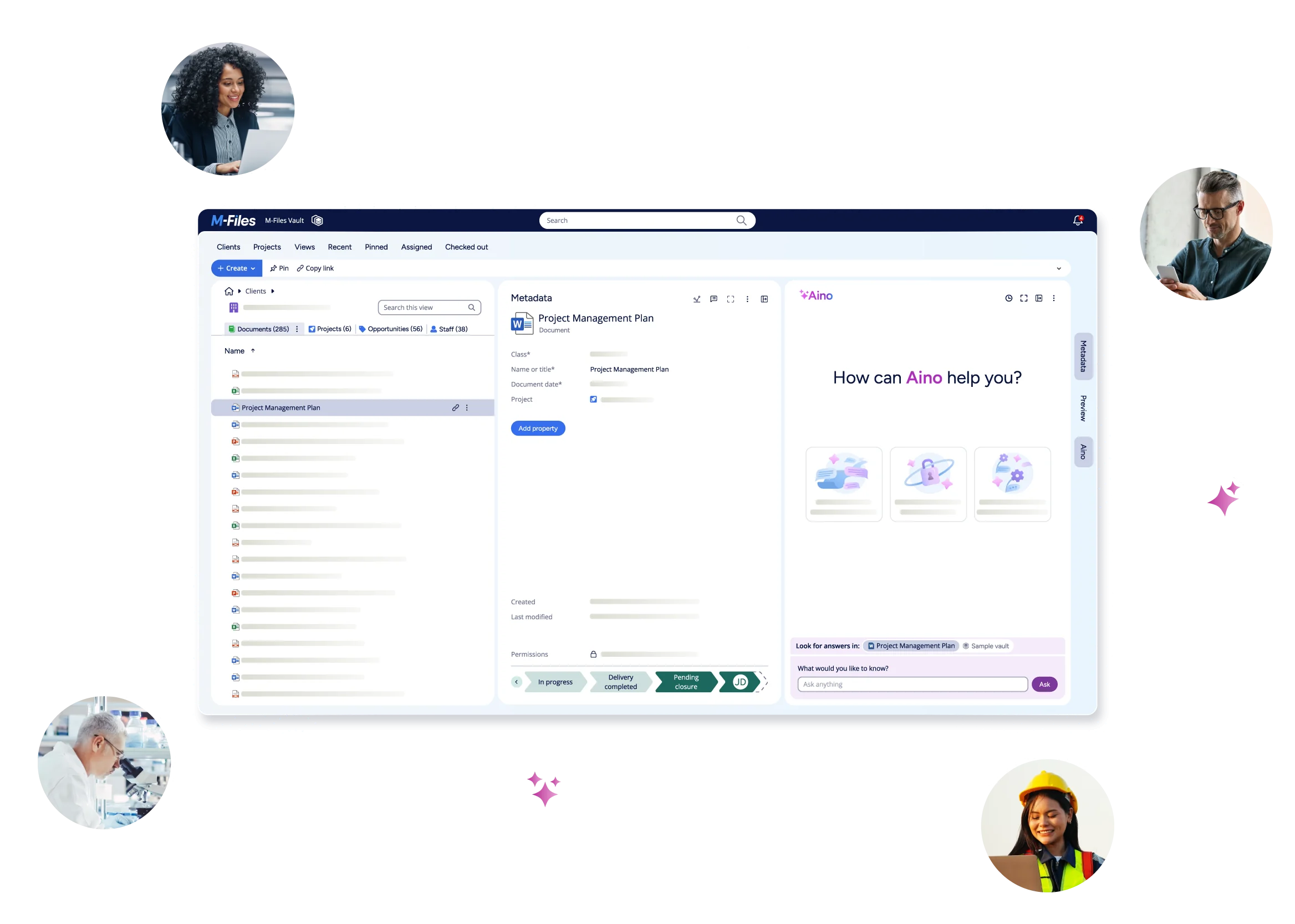
The Intelligent Metadata Layer brings all your disconnected data silos together and provides users the right content in the right context every time. It leverages artificial intelligence to digitalize business and automate office work.

More efficient information management

More efficient information management

Are you struggling to find the information you need, when you need it? With the amount of systems and repositories currently in use in most businesses, another traditional content repository doesn't solve a basic problem — finding the right information and managing it in accordance with company policies and processes.

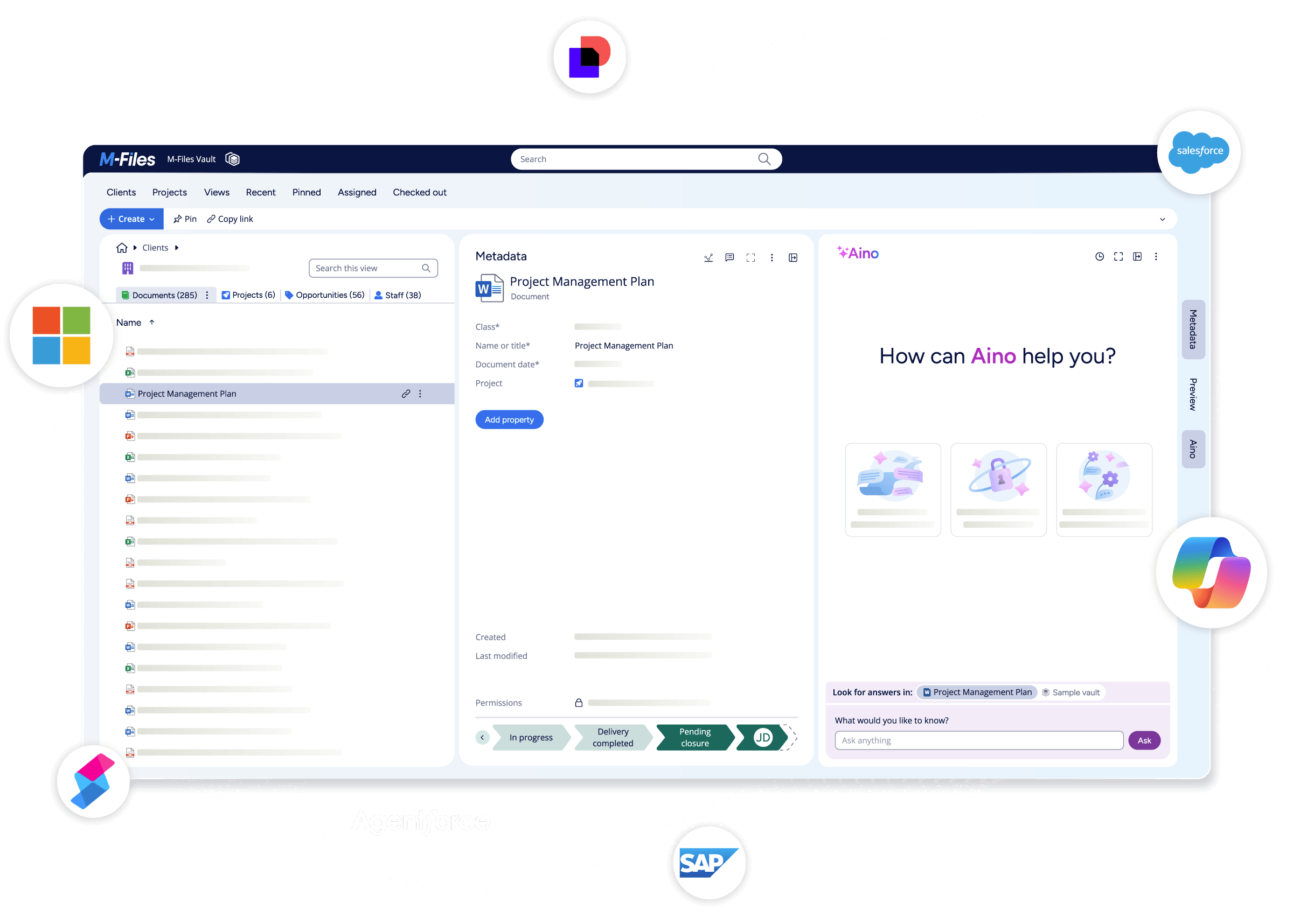
M-Files and the Intelligent Metadata Layer deliver a simple, unified user experience for modern information management. You can browse data in all connected systems and repositories, whether in the cloud or on premises with the same user interface — something that other ECM solutions don't offer.

Focus on the essential

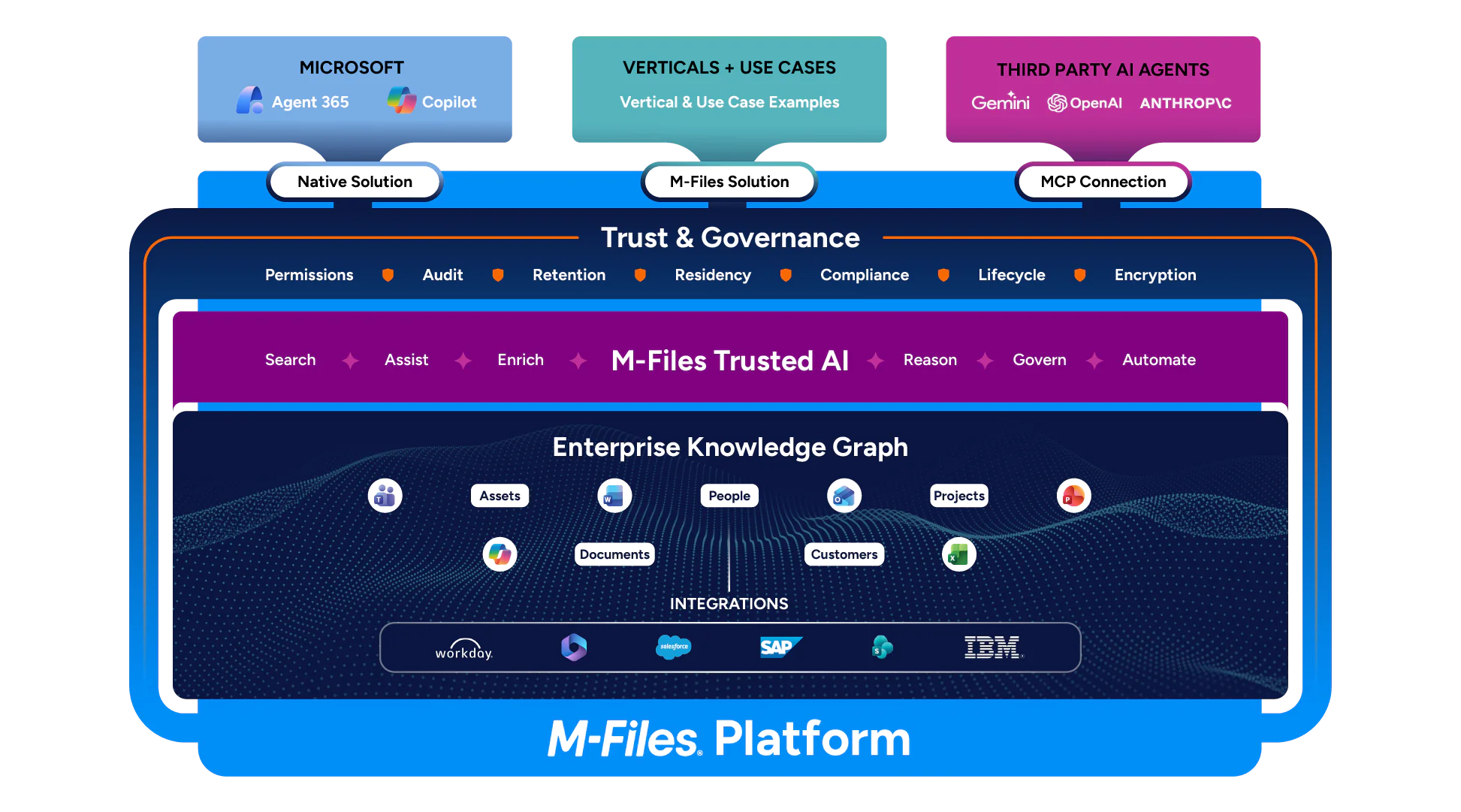
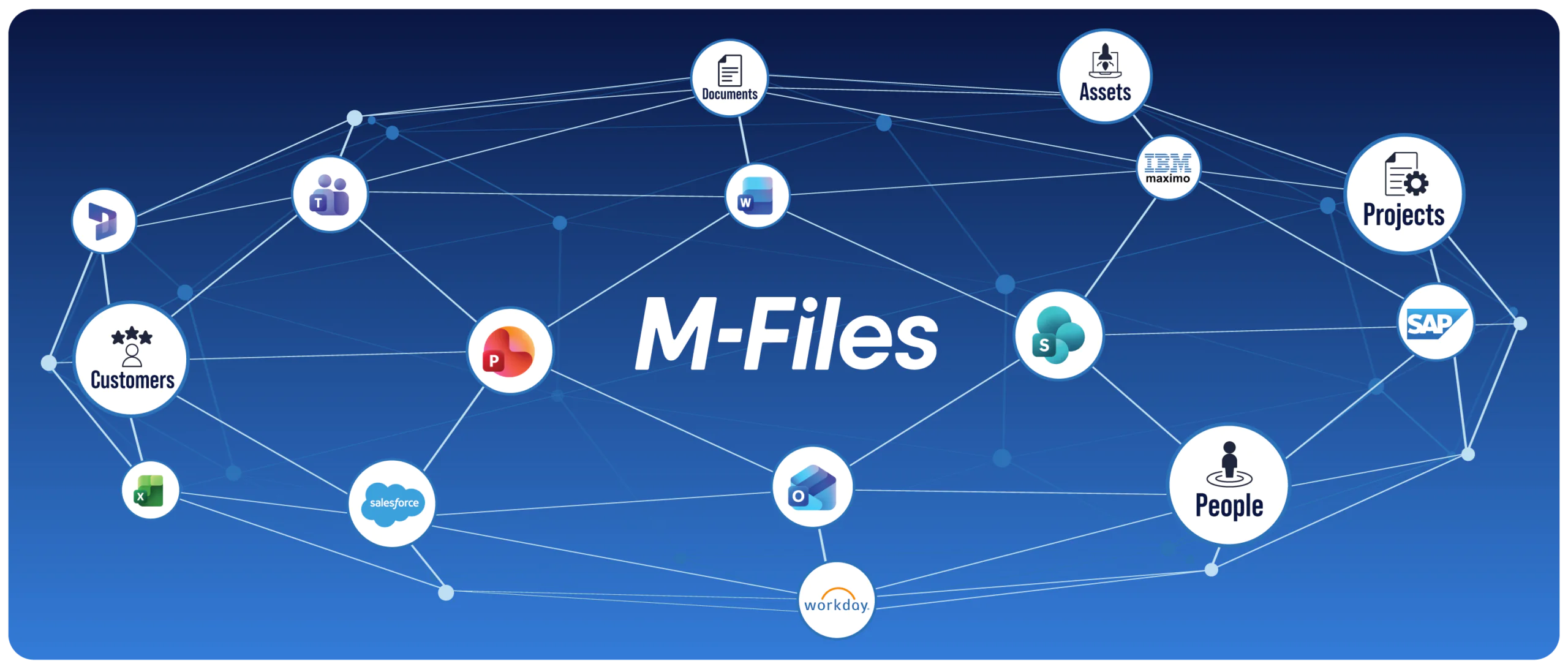
Intelligent Metadata Layer provides a practical way to bundle business-critical documents from different sources into a single view by leveraging metadata. No matter where content is stored, you can find, access and manage it in M-Files.

This allows you to bring together all your SharePoint sites, network folders, file shares and other content repositories like OpenText, Documentum, Box, Dropbox, Salesforce and more. As the information is searchable based on what it is rather than where it is stored, users don't need to spend their time futilely looking for information from separate legacy repositories, but they can find needed information in the right context.

Read more about how an intelligent, system- and repository-neutral approach to ECM can solve information chaos.

Focus on the essential

Focus on the essential

Intelligent Metadata Layer provides a practical way to bundle business-critical documents from different sources into a single view by leveraging metadata. No matter where content is stored, you can find, access and manage it in M-Files.

This allows you to bring together all your SharePoint sites, network folders, file shares and other content repositories like OpenText, Documentum, Box, Dropbox, Salesforce and more. As the information is searchable based on what it is rather than where it is stored, users don't need to spend their time futilely looking for information from separate legacy repositories, but they can find needed information in the right context.

Read more about how an intelligent, system- and repository-neutral approach to ECM can solve information chaos.

Manage content based on its business value

Manage content based on its business value

Information workers need to deal with a massive amount of rapidly-growing enterprise data. Key records — like proposals, agreements, and financial documents — need to be found quickly and in the right context. You want your information management system to alert stakeholders when it's time to either re-negotiate the contract or dispose of an old record. The problem is that business-critical documents reside in several different repositories and systems, hidden among a huge amount of dark data.

M-Files helps you easily identify business-critical data from the clutter. M-Files suggests key metadata attributes for the content automatically and ensures that content is routed via appropriate workflows and that records are applied the right retention policies. This ensures better compliance, more efficient processes, and immediate differentiation of vital records from clutter. At the end of the day, it's about streamlining workflows to improve the efficiency of office work.

No need for data migration

One of the first and biggest stumbling blocks to implementing a new information management or ECM system is data migration. How do you get all your existing data into the new system? It's difficult, time-consuming and expensive. All those data repositories are full of ROT (redundant, obsolete, and trivial) data.

It no longer matters where information is located as M-Files and the Intelligent Metadata Layer (IML) eliminate information silos and unify multiple systems and repositories. Content can stay where it is, without the need to migrate or duplicate the actual content. You can also choose to migrate all content to M-Files if you prefer.

No need for data migration

No need for data migration

One of the first and biggest stumbling blocks to implementing a new information management or ECM system is data migration. How do you get all your existing data into the new system? It's difficult, time-consuming and expensive. All those data repositories are full of ROT (redundant, obsolete, and trivial) data.

It no longer matters where information is located as M-Files and the Intelligent Metadata Layer (IML) eliminate information silos and unify multiple systems and repositories. Content can stay where it is, without the need to migrate or duplicate the actual content. You can also choose to migrate all content to M-Files if you prefer.

Put content in context with artificial intelligence

Put content in context with artificial intelligence

What kind of an impact would it have if information was classified and organized automatically based on content and context? The context of content can vary between different units and user groups in the organization, yet everyone will find that one correct document in the context relevant to their workflows.

Analyzing, classifying and tagging documents automatically allows users to focus on managing business processes efficiently while enriching the metadata for further use cases and benefits. It will also help avoid human mistakes and inconsistencies in tagging data. Additionally, the system adapts and improves over time based on key metrics and user behavior.

AI makes routine data handling easy

Intelligent information management is much more than just a place to store information.It leverages an open architecture that supports best-in-class artificial intelligence, including text analytics, Natural Language Processing (NLP), Natural Language Understanding (NLU), and machine learning.

Artificial intelligence helps churn through massive amounts of information to recognize patterns in the data. This helps put content in context, increase productivity, offer faster access to data, and improve the ability to process unstructured content.

A practical use case might include searching for personally identifiable data from the masses of information in your current network folders to ensure that data is stored in compliance with GDPR. A task that might be impossible without the help of AI.

AI makes routine data handling easy

AI makes routine data handling easy

Intelligent information management is much more than just a place to store information.It leverages an open architecture that supports best-in-class artificial intelligence, including text analytics, Natural Language Processing (NLP), Natural Language Understanding (NLU), and machine learning.

Artificial intelligence helps churn through massive amounts of information to recognize patterns in the data. This helps put content in context, increase productivity, offer faster access to data, and improve the ability to process unstructured content.

A practical use case might include searching for personally identifiable data from the masses of information in your current network folders to ensure that data is stored in compliance with GDPR. A task that might be impossible without the help of AI.

Put your email content under control

Put your email content under control

Email is the most common channel for business communication. According to a recent study, 69% of employees store and manage documents out of their email inbox. Yet, email lacks the tools to efficiently store and find relevant information when necessary.

M-Files provides metadata suggestions for emails and attachments by automatically analyzing the content and header data. This increases email filing consistency and accuracy and allows you to manage email content efficiently. Filing and managing is easy and intuitive, and improves over time as machine learning picks up on common behavior patterns.

Ready to get started?


Schedule a demo

We'll schedule a time to show you a customized demo of M-Files at your convenience.

Download Free Trial

Begin your free 30-day trial today to experience intelligent information management firsthand.

Ask a Question

We're here to help. If you have any questions about M-Files or just need more information, just let us know.