
Fey Industries
How Fey Industries Reduced Operational Friction and Accelerated Intelligent Automation with M-Files AI
Highlights
- AI-powered purchase order processing: M-Files AI automatically classifies purchase orders with 90% accuracy, allowing team members to focus on exceptions instead of repetitive document processing.
- Context-first information management: Metadata-driven classification improves search, workflow automation and document routing while reducing human error.
- Faster processing and better customer service: Purchase orders that previously took minutes to process now take seconds, enabling team members to focus on higher-value work.
- A foundation for intelligent automation: M-Files combines AI, metadata and workflow automation to support future business process automation across the organization.

Use Case
Compliance Management
Quality Management
Industry
Manufacturing
Country
United States
Share This Story
Company Introduction
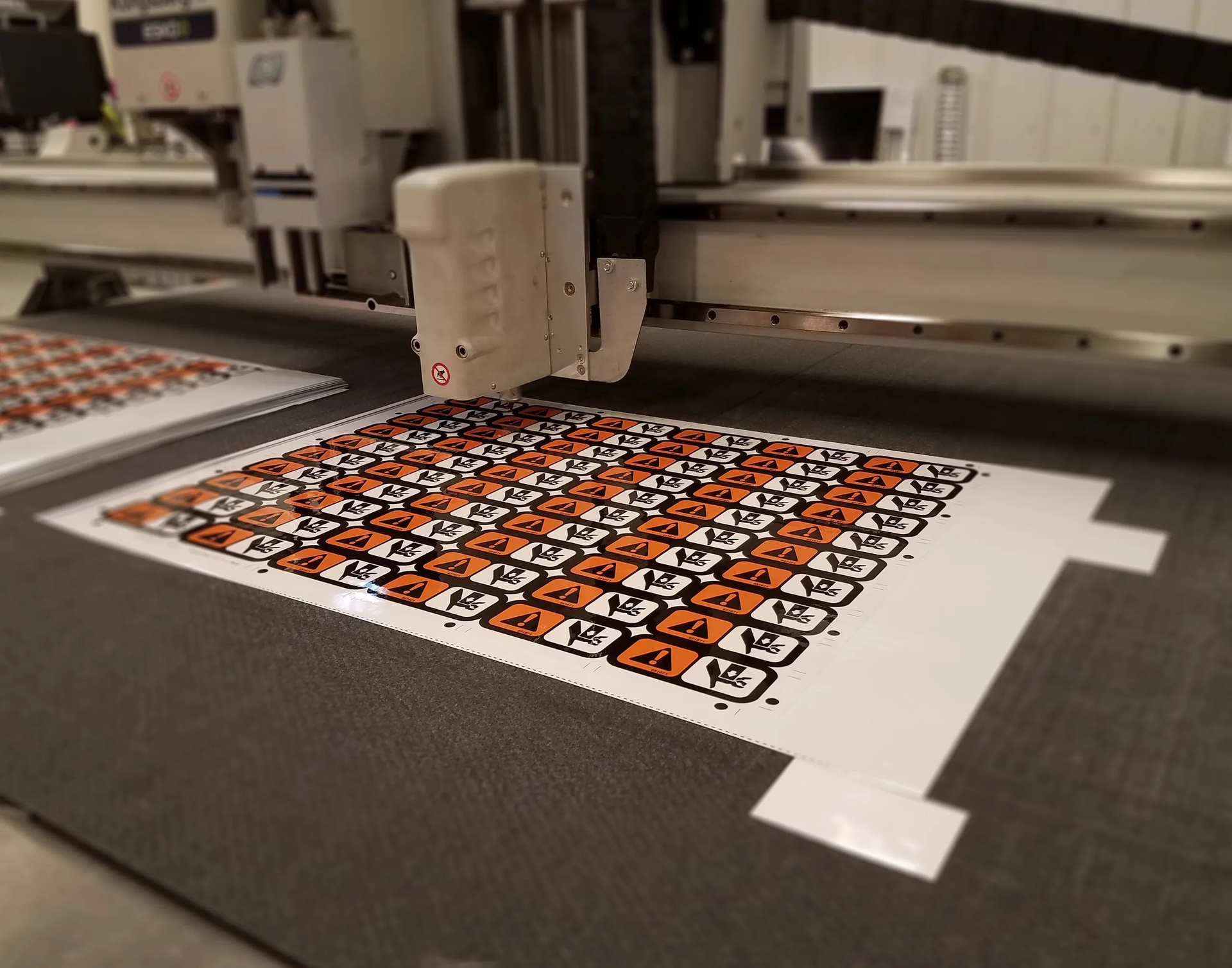
Fey Industries is a third-generation, family-owned American manufacturer producing promotional products, packaging solutions and custom-manufactured products through multiple business units. As the company continues to grow, technology has become a central part of its strategy for improving operations and supporting future innovation.
For Fey Industries, modernizing information management was never simply about replacing an aging document repository. The broader objective was to remove operational friction from everyday business processes, allowing team members to spend less time handling documents and more time supporting customers and solving business problems.
As Director of IT, Roman Bulkiewicz leads infrastructure, software development and business technology across the organization. His team works closely with every department to identify opportunities where automation can improve efficiency while making team members’ work easier.
Key Challenges Before M-Files
A Legacy Repository That Had Reached Its Limits
Before implementing M-Files, Fey Industries relied on a document management system that had been in place for over twenty years. While it served as a repository for documents, processing business information remained highly manual.
Every purchase order arriving by email had to be reviewed, understood, classified and routed before it could enter downstream business processes.
“We mainly had one person, but multiple people who would go in and try to read it, understand it, classify it and move it into the old software, and then move it through a workflow process, but it was mostly manual,” Roman recalled.
The process depended heavily on team members performing repetitive administrative work rather than activities that added value for customers.
Repetitive Work Limited Business Capacity
Purchase orders arrived in many different formats. Some originated from large customers with highly standardized documentation, while others came from small businesses using handwritten purchase orders or even photographs of paper documents.
Because documents required manual interpretation, team members spent considerable time extracting customer information and purchase order numbers before work could begin.
As business volume increased year over year, this approach became increasingly difficult to scale.
"What stood out about M-Files was the metadata; the fact that we had a lot of ways to configure it. AI was absolutely part of how we decided to move forward, but not the sole reason; the use of metadata played a role in our decision too."
Roman Bulkiewicz, Director of IT, Fey Industries
Looking Beyond Traditional Document Management
When Fey Industries evaluated replacement solutions, the company was not simply looking for a more modern document management system. It wanted a platform that could support its long-term AI and Automation strategy while integrating naturally into existing business processes.
“The AI capabilities within M-Files gave us a clear advantage. M-Files’ continued investment in technology aligns closely with the evolving needs of our business,” Roman explained.
Another deciding factor was the flexibility provided by metadata.
“What stood out about M-Files was the metadata; the fact that we had a lot of ways to configure it. AI was absolutely part of how we decided to move forward, but not the sole reason; the use of metadata played a role in our decision too,” Roman added.
"We spent a pretty decent amount of time in the very beginning mapping our business processes, mapping our business and understanding what metadata meant to us."
Roman Bulkiewicz, Director of IT, Fey Industries
The M-Files Solution
Automating Purchase Order Processing with AI
Incoming purchase orders are now automatically monitored and processed by M-Files AI. Instead of requiring team members to manually review every document, AI identifies customer information, extracts purchase order numbers and prepares documents for downstream ERP processing.
Today, the system correctly classifies approximately 90% of incoming purchase orders, leaving team members to review only the exceptions. The change has fundamentally altered how work is performed. Rather than reading every document, team members simply verify the AI’s recommendations before allowing documents to continue through the process. “What was taking five minutes is now taking a second or two,” Roman observed.
Building Business Context Through Metadata
Before introducing AI, Fey Industries invested significant effort in understanding its own business processes.
The company mapped how information moved through the organization and identified the metadata required to classify documents consistently. Rather than treating metadata as an administrative task, Fey Industries viewed it as the business context that enables automation throughout M-Files.
“We spent a pretty decent amount of time in the very beginning mapping our business processes, mapping our business and understanding what metadata meant to us,” Roman said.
That preparation has become the foundation for everything that followed. Because AI receives structured business context rather than isolated documents, it can make better decisions about classification, routing and workflow automation. “Metadata allows us to classify and search much better than what we had ever done in the past,” Roman noted.
Using AI to Support People, Not Replace Them
For Fey Industries, AI is not about eliminating jobs. It is about removing repetitive work so team members can focus on activities that require experience, judgment, and customer interaction.
“We don’t replace humans with AI. We replace the monotonous tasks that humans do and let them do the smart tasks, while AI takes care of the basics behind the scenes. People are still required for business growth, problem-solving and providing positive customer experiences. Those are things AI cannot replace,” Roman emphasized.
Combing technology with human oversight has helped allow the company to increase processing capacity while maintaining confidence in the quality of its business decisions.
The Results
M-Files AI now correctly classifies approximately 90% of incoming purchase orders. It identifies customer information, extracts purchase order numbers and prepares documents for downstream ERP processing.
Purchase orders that previously took around five minutes to process can now be processed in one or two seconds. Instead of manually reading and classifying every document, employees verify the AI’s recommendations and review only the exceptions.
This reduces repetitive administrative work and allows employees to focus more of their time on business growth, problem-solving and customer service.
Metadata-driven classification has also improved how Fey Industries classifies, searches and routes information. Combined with AI and workflow automation, this provides a foundation for future business process automation across the organization.


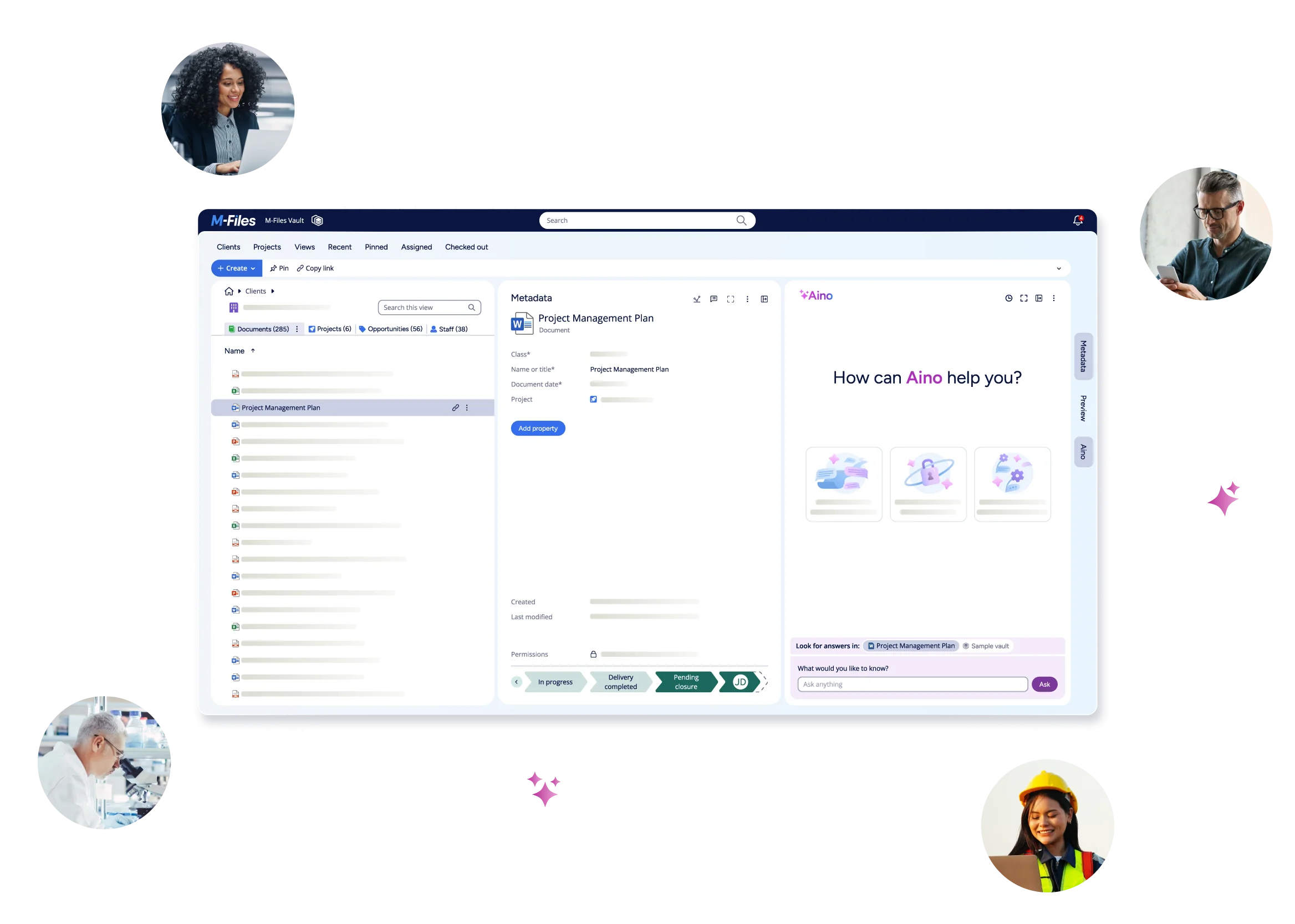
See M-Files in Action
Seeing is believing. Request a live demo to discover how AI-powered document management in context can transform your organization.